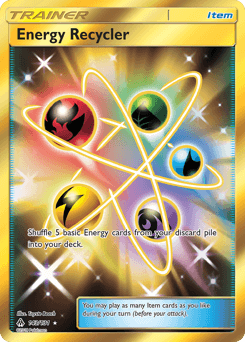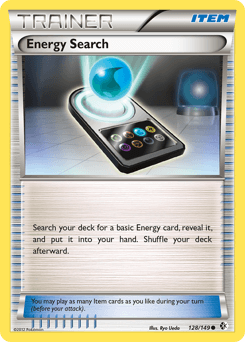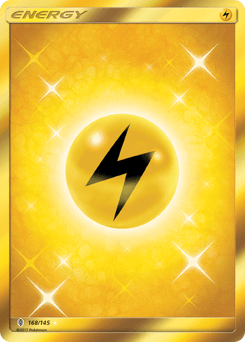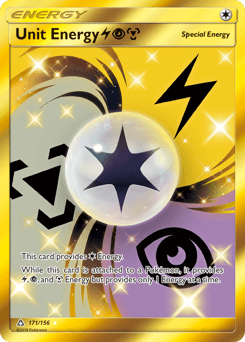
Shockwire

Kanata Kanata Expanded 1,076 views Jul 28, 2023
Extravagant
Purchase
Deck Primer

“Metals conduct electricity because they have a sea of delocalized electrons that are free to leave as soon as they feel a voltage.”

Rather than electrons orbiting a specific atom, the electrons roam all over the group of metal atoms.

Just as metal ions give up electrons to a different atom in ionic bonding, the metal ions give up those same electrons to the electron sea in metallic bonding. Na+ means that a piece of sodium will have 1 electron in the electron sea, per Na atom. Al3+ means

...

“Metals conduct electricity because they have a sea of delocalized electrons that are free to leave as soon as they feel a voltage.”

Rather than electrons orbiting a specific atom, the electrons roam all over the group of metal atoms.

Just as metal ions give up electrons to a different atom in ionic bonding, the metal ions give up those same electrons to the electron sea in metallic bonding. Na+ means that a piece of sodium will have 1 electron in the electron sea, per Na atom. Al3+ means that aluminum metal will have 3 free electrons per aluminum atom.


Metallic bonding holds together because of electrostatic forces: each atom is positively charged and the negatively charged “sea” acts like glue that binds atoms together. 

As you have a piece of metal with a terrifyingly large number of atoms and electrons, these allowed energy states for each atom basically merge into a “band” of continually allowed states. This is called the valence band


Beyond the valence band is the conduction band. The conduction band is the collection of energy states where the electrons have enough energy to leave the atom that they’re bound to. 

The band gap is the distance between these valence bands and conduction bands. The difference between metals, insulators, and semiconductors is the size of the band gap.

Metals have no band gap. In other words, the conduction band and valence band overlap, so an atom is not bound to any particular atom. If it has enough energy to leave, it just leaves.

Semiconductors have a small band gap
This means that if the electrons don’t have enough energy to fully jump across the band gap, the semiconductor does not conduct at all. If there is enough energy to pass this barrier, the material conducts. Semiconductors are super useful because they can act as switches, either passing 0% or 100% of the current.


Insulators have a large band gap.
The distinction between insulator and semiconductor is a bit nebulous–it’s not like scientists have a simple value and if the band gap is larger than that value, it’s an insulator. These terms are practical–anything which is considered an insulator has a band gap that is too large to cross in a realistic scenario. Trying to pass too much current through many insulators will destroy the material before electrons have enough energy to jump across the band gap.

Card Types

Trainer 25
Energy 18
Pokémon 17

Energy Types

Metal 11
Lightning 6

Energy Curve

Distribution of attack energy costs in your deck

1 Energy 5 attacks
5
17.9% of attacks
2 Energy 4 attacks
4
14.3% of attacks
3 Energy 14 attacks
14
50.0% of attacks
4 Energy 4 attacks
4
14.3% of attacks
5 Energy 1 attack
3.6% of attacks

Opening Hand Probability Calculator

Calculate the probability of drawing specific cards in your opening hand

%
Probability of drawing at least of in your opening hand

Comments

No comments yet…

You must be logged in to comment.